Green Point
Logistics
عربي Request a Quote
  • SVC. 01 · Sea freight
  • LOAD. FCL · LCL · Consolidation
  • PORTS. 5
  • DIR. Import + export

Sea freight, FCL and LCL.

Full containers, shared containers or consolidated loads, to and from Egypt's main ports. We book the space, prepare the documents and clear the cargo at the Egyptian end.

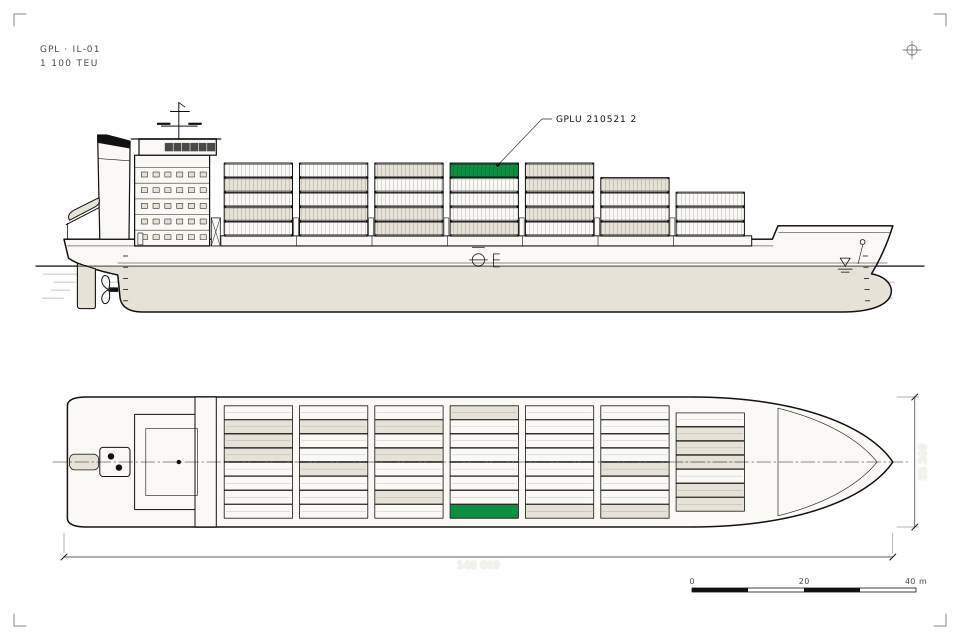
Line drawing of a container vessel loaded with containers, in side and top view.

01

Containers, booked and cleared.

Since 2021 · consolidation and LCL specialists

Most of Egypt's trade moves by sea, and most delays happen at the port. We handle the ocean leg and the Egyptian paperwork together, so your container is registered, documented and ready for clearance before it berths.

Consolidation and LCL are a specialty: if you do not fill a container, we combine your cargo with others and you pay for the space you use.

Load types
FCL · LCL · Consolidation
Egyptian ports
Alexandria · Dekheila · Damietta · Port Said · Sokhna
Typical transit
About 1 week to most of Europe, about 3 weeks to major US ports
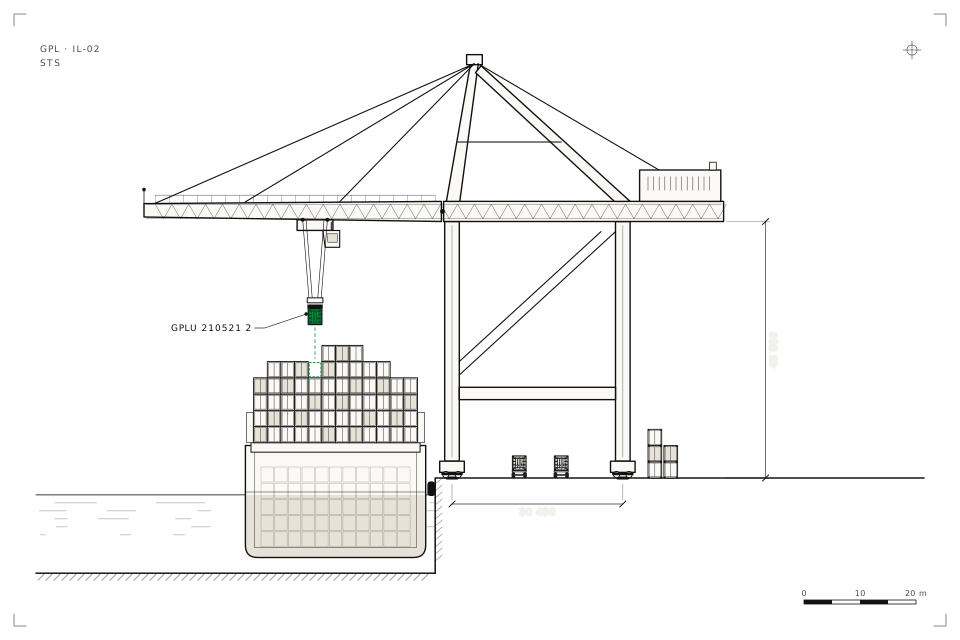
Line drawing of a ship-to-shore gantry crane lifting a container off a vessel at the quay.
Fig. 02 · Discharge at the terminalNot to scale
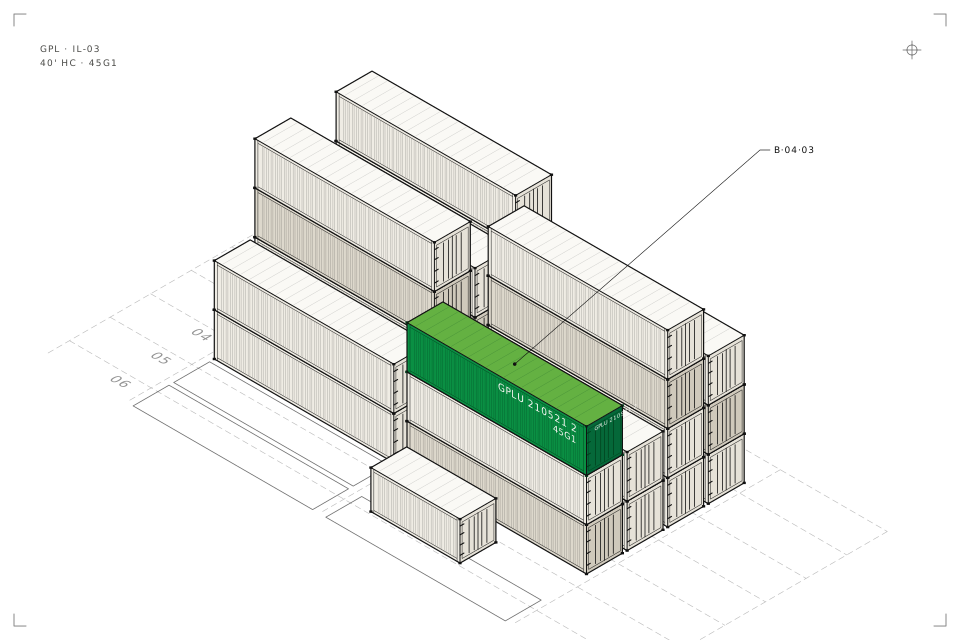
Isometric drawing of a container stack in the yard, one green container highlighted.
Fig. 03 · FCL or LCL, one boxNot to scale

02

What's included.

Standard scope

  • Space booking

    With shipping lines, for full containers (FCL) and shared containers (LCL).

  • Consolidation

    Several suppliers' cargo combined into one container, on one bill of lading.

  • Documents checked

    Bill of lading and shipping documents checked before departure.

  • ACI and UCR

    ACI pre-registration support for imports into Egypt, UCR set-up for sea exports.

  • Customs clearance

    Import or export clearance at the Egyptian port, by the same team.

  • Container haulage

    Trucking to or from your factory or warehouse.

  • Free-day tracking

    Free days and demurrage tracked from berthing to empty return.

  • Partners abroad

    Cross-border shipping with our partner agents at destination.

03

At a glance.

Typical values · not guarantees

Sea freight at a glance
Load typesFCL (full container load) · LCL (shared container) · Consolidation
Containers20′ and 40′ dry, 40′ high cube · Reefer, open top and flat rack on request
Egyptian portsAlexandria · Dekheila · Damietta · Port Said · Sokhna
Trade lanesEurope · North America · Asia · Africa · Middle East
Typical transitFrom Alexandria, port to port: about 1 week to most of Europe, about 3 weeks to major US ports (typical, not guaranteed; varies by carrier, routing and transhipment)
Free time (imports)Published combined demurrage and detention free time for dry containers: typically 5–6 days; reefers 3–4 days (2026 carrier tariffs)
Key documentsBill of lading · Commercial invoice · Packing list · Certificate of origin · ACID number (imports)
Add-onsCustoms clearance · Inland haulage · Warehousing · Last-mile delivery · Cargo insurance

04

How a sea shipment runs.

Import · 6 steps

  1. Quote and booking

    You send cargo details and the ready date; we confirm the rate, the line and the sailing.

  2. ACI and documents

    For imports, the shipment is registered on Nafeza and the ACID number goes on the bill of lading and invoice. We check every document before the cargo loads.

  3. Loading and sailing

    FCL is loaded at your supplier's site; LCL goes through a consolidation warehouse. We send you the bill of lading and the vessel details.

  4. Arrival in Egypt

    We track the vessel, collect the delivery order and start the free-day count on berthing.

  5. Clearance

    Customs declaration, inspection and payment of duties and VAT.

  6. Delivery

    The container is trucked to your door and the empty returned on time.

05

Documents we need.

Have these ready

Imports into Egypt

  • Commercial invoice (with the ACID number)
  • Packing list
  • Bill of lading (with the ACID number)
  • Certificate of origin (and EUR.1 or other preferential certificate if you claim reduced duty)
  • Importer registration and tax card details
  • Any permits your goods need (for example food safety or import control registration)

Exports from Egypt

  • Commercial invoice and packing list
  • Exporter registration details
  • UCR number from Nafeza: required for every sea export booking since July 2026
  • Certificate of origin, EUR.1/EUR-MED or other certificate the buyer's market needs
  • Any product certificates (for example phytosanitary or health certificates for food and agri)

06

Ports we serve.

Egypt · 5 ports

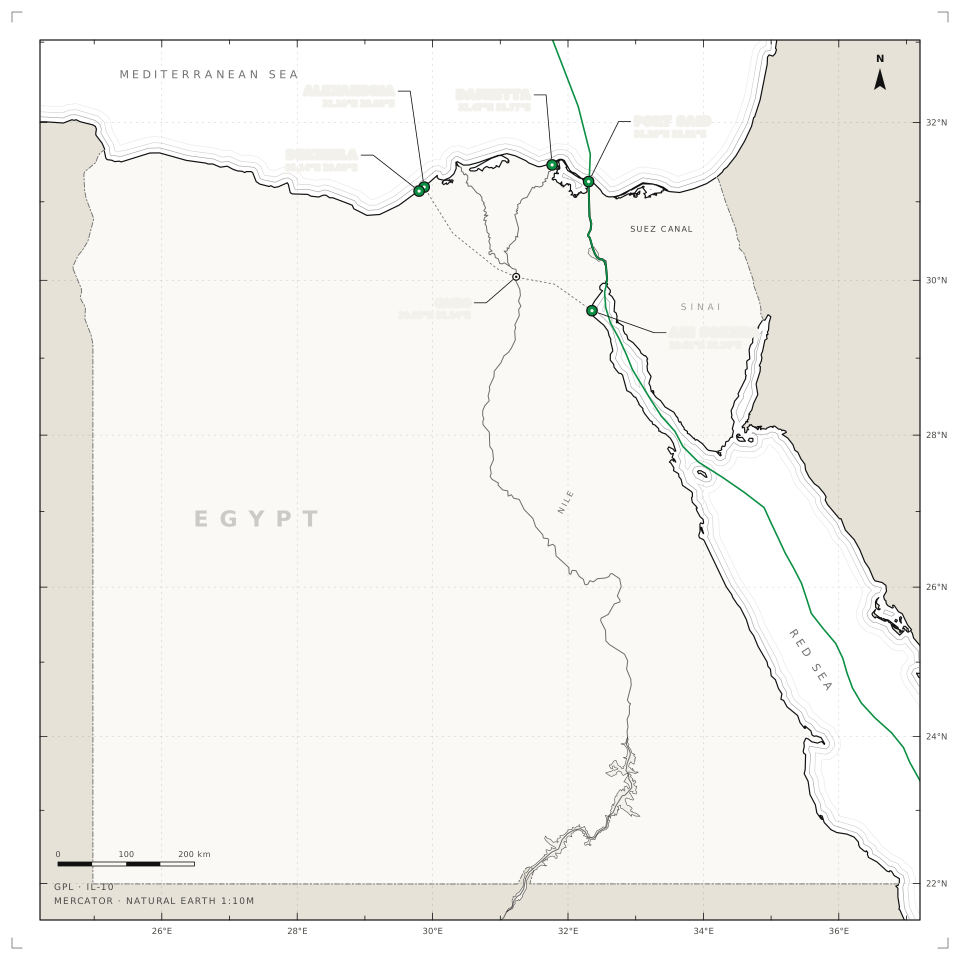
Map of Egypt’s main ports: Alexandria, Dekheila, Damietta and Port Said on the Mediterranean, and Ain Sokhna on the Red Sea, with the Suez Canal and Cairo.
Fig. 04 · Egypt’s sea gatewaysMain trade lanes, not a sailing schedule

Alexandria

Mediterranean · EGALY

Egypt’s busiest gateway. Its port authority, which also runs Dekheila, handles about 60% of the country’s foreign trade.

Terminal
Hutchison Ports AICT, running container terminals here since 2005
Serves
Alexandria QIZ and Borg El Arab, one of Egypt’s main garment-factory areas
Main lanes
Europe and the Mediterranean · US East Coast via Gibraltar

What we do here

FCL and LCL bookings, consolidation and clearance at the port, by the same team. Our head office is in El Manshya, Alexandria.

Dekheila

Mediterranean · EGEDK

Alexandria’s second harbour, west of the city, run by the same port authority.

Terminal
Hutchison Ports AICT container terminal
Serves
The same hinterland as Alexandria: Alexandria QIZ and Borg El Arab
Main lanes
Europe and the Mediterranean · US East Coast via Gibraltar

What we do here

FCL and LCL bookings, consolidation and clearance in the Alexandria port area, by the same team.

Damietta

Mediterranean · EGDAM

Container port for the Nile Delta, with the new DACT terminal open since February 2026.

Terminal
DACT (Hapag-Lloyd, Eurogate, Contship): 18 m of water, 3.3 million TEU at full build
Serves
The Middle Delta QIZ and the Dakahleya knitting cluster
Main lanes
Europe and the eastern Mediterranean

What we do here

FCL and LCL bookings, consolidation and clearance at the port, by the same team.

Port Said

Mediterranean · Suez Canal · EGPSD

Two ports at the northern entrance of the Suez Canal.

East Port Said
Transshipment hub, with a container terminal run by AP Moller-Maersk
West Port Said
Multi-purpose: containers, general cargo and RoRo, up to 900,000 TEU a year
Serves
The Suez Canal QIZ zone and Port Said governorate
Main lanes
Europe · the Gulf and Asia through the Suez Canal

What we do here

FCL and LCL bookings, consolidation and clearance at the port, by the same team.

Sokhna

Red Sea · Gulf of Suez · EGSOK

Egypt’s main gateway to the Gulf, East Africa and Asia, and the closest of the five to Greater Cairo.

Terminal
DP World runs basins 1–2; terminals CT1 and CT2 can handle 1.1 and 1.8 million TEU
Serves
10th of Ramadan, Obour, Badr and Greater Cairo
Main lanes
The Gulf, East Africa and Asia via the Red Sea, without a canal transit

What we do here

FCL and LCL bookings, consolidation and clearance at the port, by the same team.

Other Egyptian ports and airports on request.

Port facts: port authorities and terminal operators. Red Sea and Suez routings can change voyage by voyage; we confirm the routing with every booking.

07

Sea freight questions.

All FAQs

FCL or LCL: which should I choose?

FCL gives you a whole container and usually suits loads above about two-thirds of a 20′ container. Below that, LCL is usually cheaper because you pay only for the cubic metres you use. Send us the volume and weight and we will price both.

Can you combine cargo from several suppliers?

Yes. Consolidation is one of our specialties. We collect from each supplier, load one container and ship it on one bill of lading.

How many free days do I get at the port?

Fewer than most importers expect. Published free time for dry containers on Egypt imports is typically 5–6 days of combined demurrage and detention, counted from discharge until the empty is returned; reefers get 3–4 days. Terminal storage free time is separate. Terms differ by line and can be negotiated, so we confirm them before you book and track them to the last day.

Do you handle ACI registration?

Yes. We register the shipment on Nafeza at least 48 hours before it leaves the export country, help your supplier onboard on CargoX, and check that the ACID number is on the bill of lading and every other document.

What changed for sea exports in 2026?

Since July 2026 every sea export needs a 19-digit UCR number from Nafeza before booking. Carriers reject bookings without a valid UCR, and the UCR and shipper cannot be changed afterwards, so we set it up correctly the first time.

09

Get a quote for this shipment.

Send the cargo, route and ready date. We reply with a clear price and the documents you need.